
FEATURED
Cell Surface Targets for Individual Cancer Patients Analyzed with Common Fund Datasets
Given RNA-seq samples from a patient tumor, we screen for targets which are highly expressed in the tumor but lowly expressed across all healthy human tissues in GTEx. Detailed information about the selected target are queried from several DCCs.
All Use Cases
Explore different use cases that utilizes data from different CFDE participating programs

Data Distillery Knowledge Graph
Liquid Biopsy of Dexamethasone Response
Find genes that are up-regulated by dexamethasone, (2) loci expressed in exRNA that overlap RBP binding regions, (3) the RBP that overlaps the locus, and (4) the biofluid(s) where locus was expressed in exRNA.
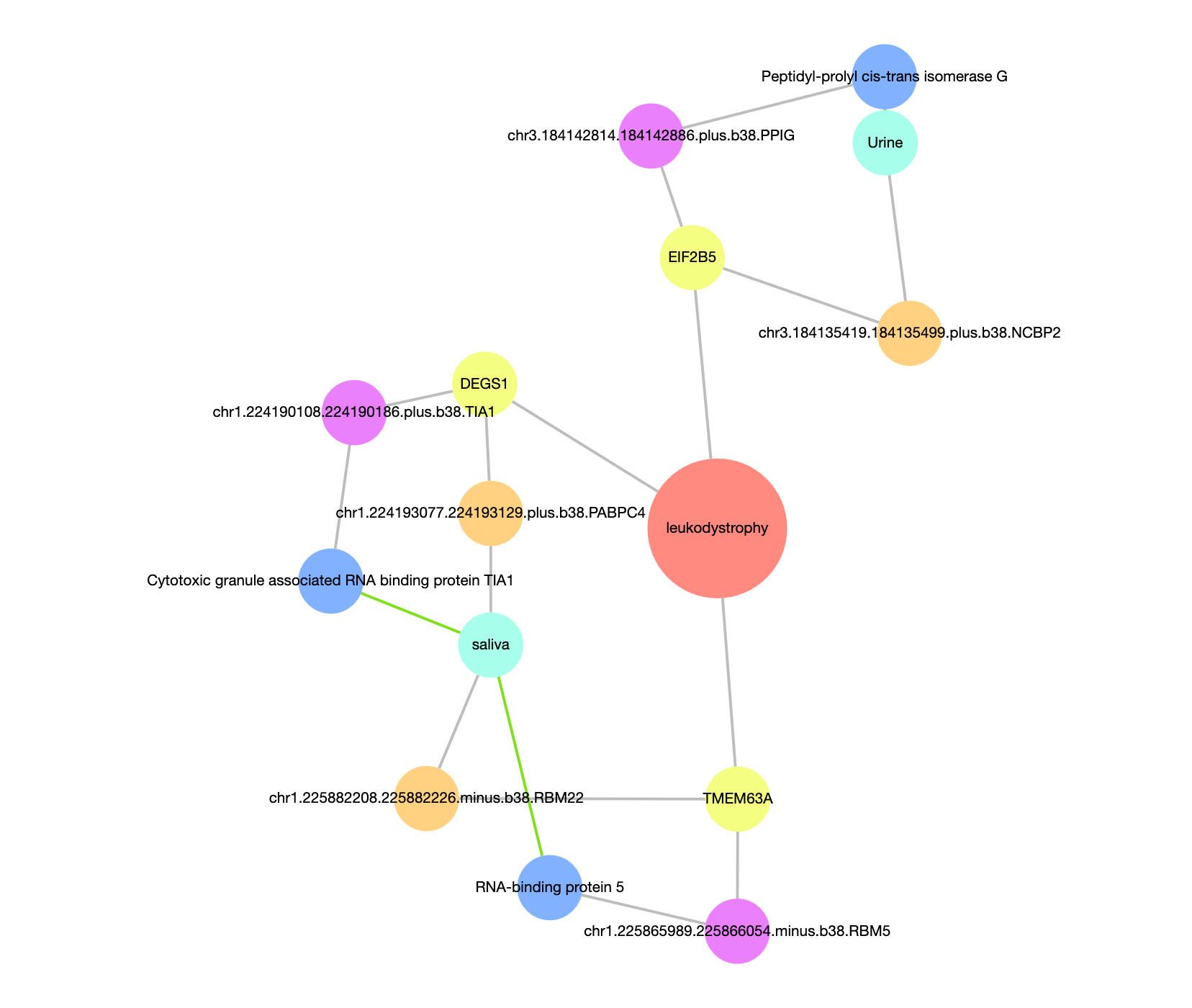
Data Distillery Knowledge Graph
Liquid Biopsy of Drug Response
For a given drug term, return (1) up-regulated genes, (2) loci expressed in exRNA that overlap RBP binding regions, (3) the RBP that overlaps the locus, and (4) the biofluid(s) where locus was expressed in exRNA.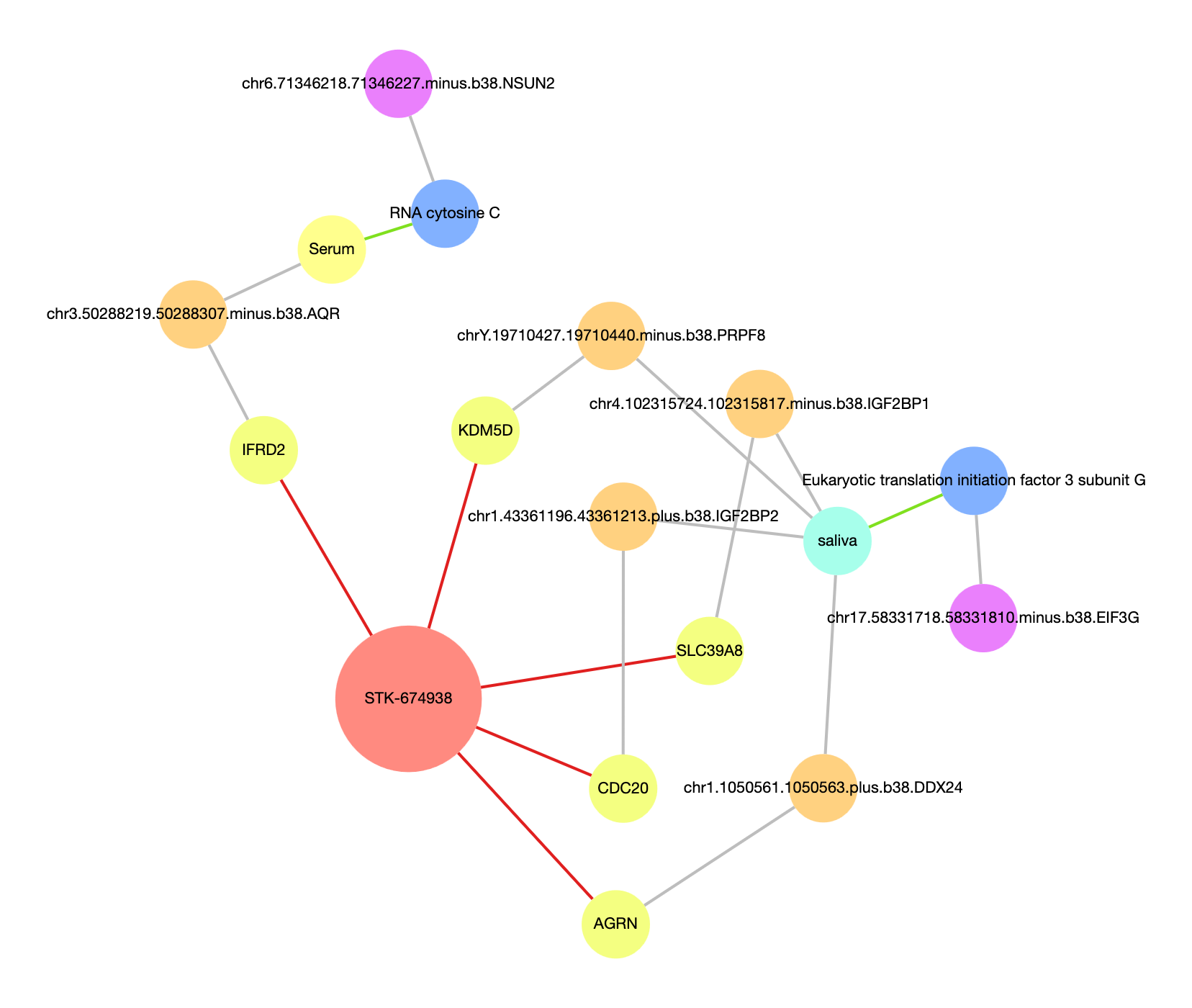

@CFDE Workbench 2026
The CFDE Workbench is actively being developed and maintained by the CFDE Data Resource Center (DRC).The DRC is funded by OT2OD036435 from the Common Fund at the National Institutes of Health.
The CFDE Workbench is actively being developed and maintained by the CFDE Data Resource Center (DRC).The DRC is funded by OT2OD036435 from the Common Fund at the National Institutes of Health.
@CFDE Workbench 2026